HowToDefi: Staking POL on Polygon

Down 78% on my POL investment. Most people would cut their losses and run. I’m not throwing good money after bad—I’m letting bad money grow through staking. By earning rewards, I can lower my average cost without adding fresh capital. Here’s my staking strategy and how I’m choosing validators.
Background
I have a small bagful of POL that was previously MATIC. If you are not aware, the Polygon blockchain migrated their token from MATIC to POL since Sept 2024.
The average cost of each MATIC/POL token I have is around $0.89. The current price is around $0.19462. That’s a pretty big drop.
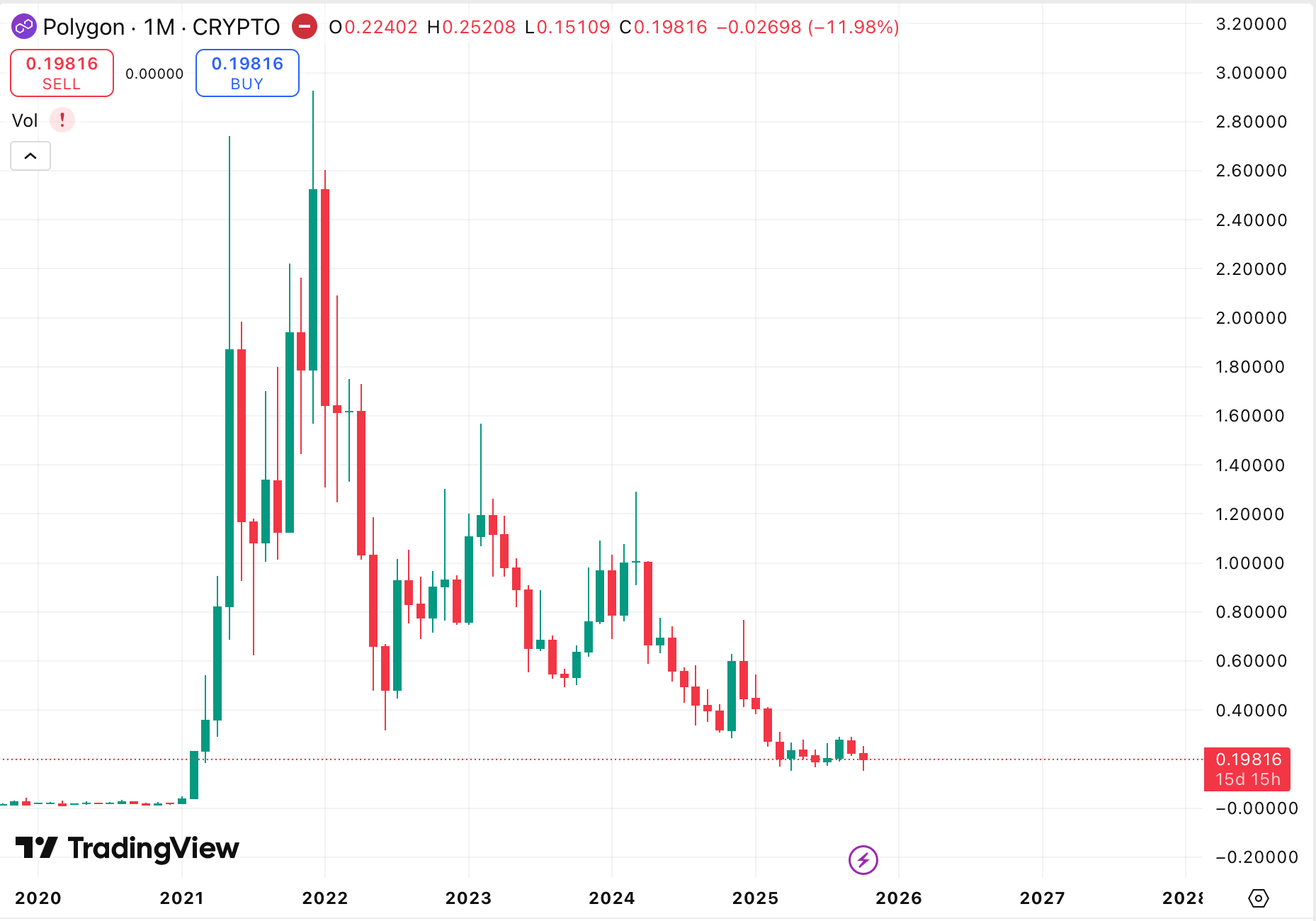
I was tempted to sell it and cut my losses, but looking at the number of partnerships they are involved in (with Disney, Starbucks, Meta etc). I think there is still a chance for it because the fundamentals are still solid:
Polygon is a Layer 2 Ethereum chain, originally designed for scalability and usability for Ethereum. This is because Ethereum took too long to confirm transactions on their chain.
The partnerships they signed up with corporations shows that there are other institutions that believe in their fundamentals.
However, they face brutal competition since the crypto landscape has changed considerably. BASE is the network of the day and has taken up quite a fair bit of their market share. Other L2s are also chomping at the bit and Ethereum itself is also making improvements to their own chain. This would further water down the necessity for a blockchain like POL unless they have a better proposition.
By choosing to stake the POL tokens, I think it’s conceivable that I will be able to bring down my average cost further with the staking rewards I get. The worst-case scenario is the token going to zero and I lose what I put in. Ah well, that’s the tuition I pay.
Where to Stake
The easy path to staking is doing it through an exchange, kinda like a set-and-forget as long as you trust the exchange to take good care of your funds.
In the spirit of the original crypto-punk, I prefer to stake natively, i.e. directly on the Polygon platform. This requires me to connect my wallet to the platform and monitor my earnings through it.
The most important thing to consider when staking this way, is the selection of a good validator. We want a validator that is:
Always on the network (good uptime)
Does not have a history of getting rewards slashed for bad behaviour
Commission charged is reasonable.
There are also pros and cons associated with institutional staking companies versus the mom-and-pop kind. While support for the little guy is important, staking is still a business after all, so where possible, don’t go with the fly-by-night kind of operation.
Polygon Staking
When you first visit the Polygon Staking webpage, you’ll see some stats upfront:
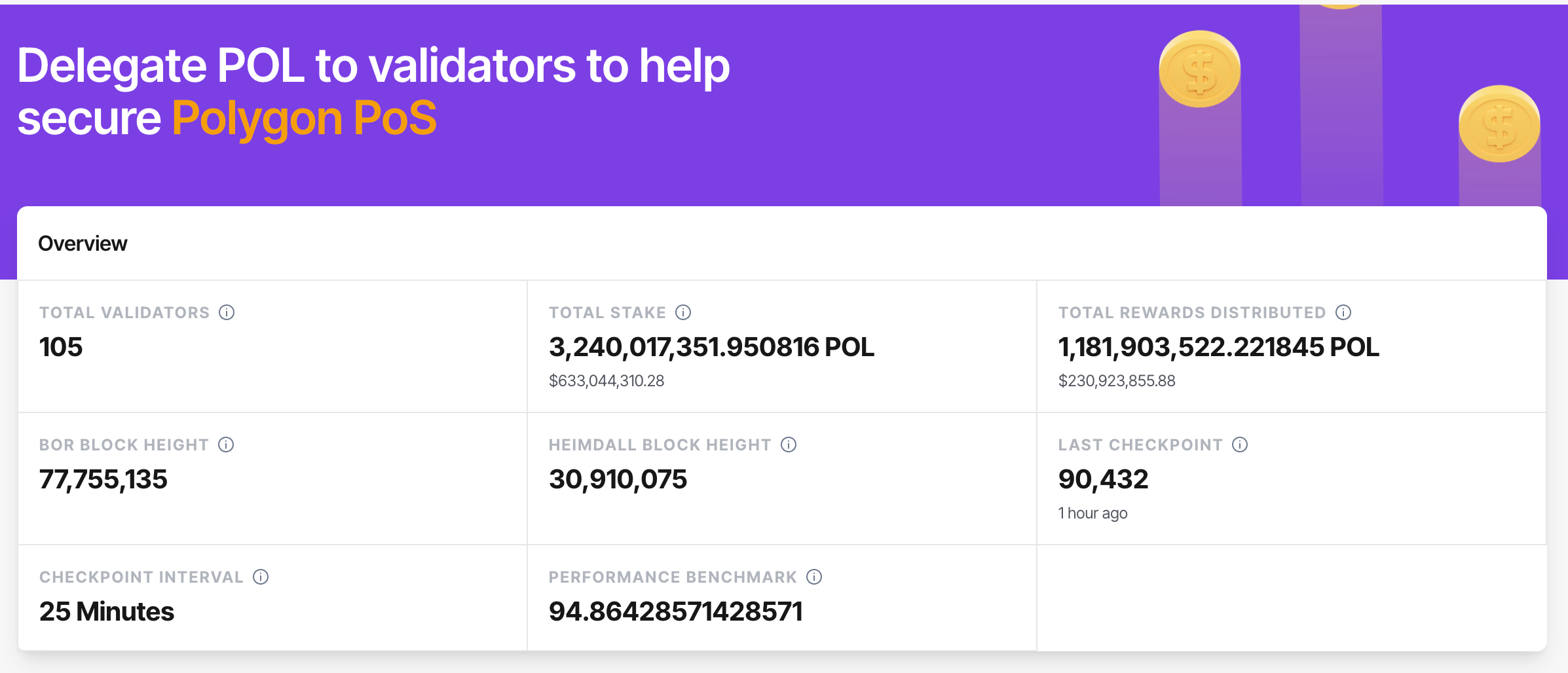
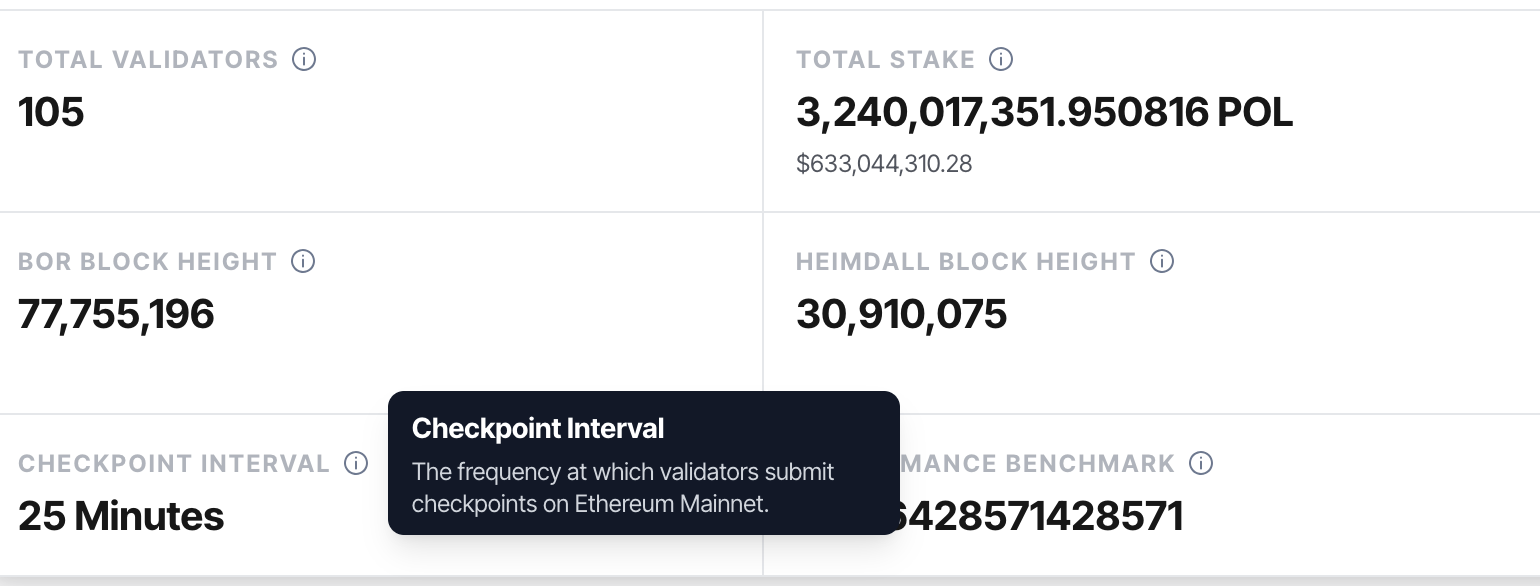
Most of the labels are fairly self-explanatory. If you are unsure what a label means, simply hover the mouse over the “i” for a description.
Next is the list of validators. Here are a handful for us to take a look at:
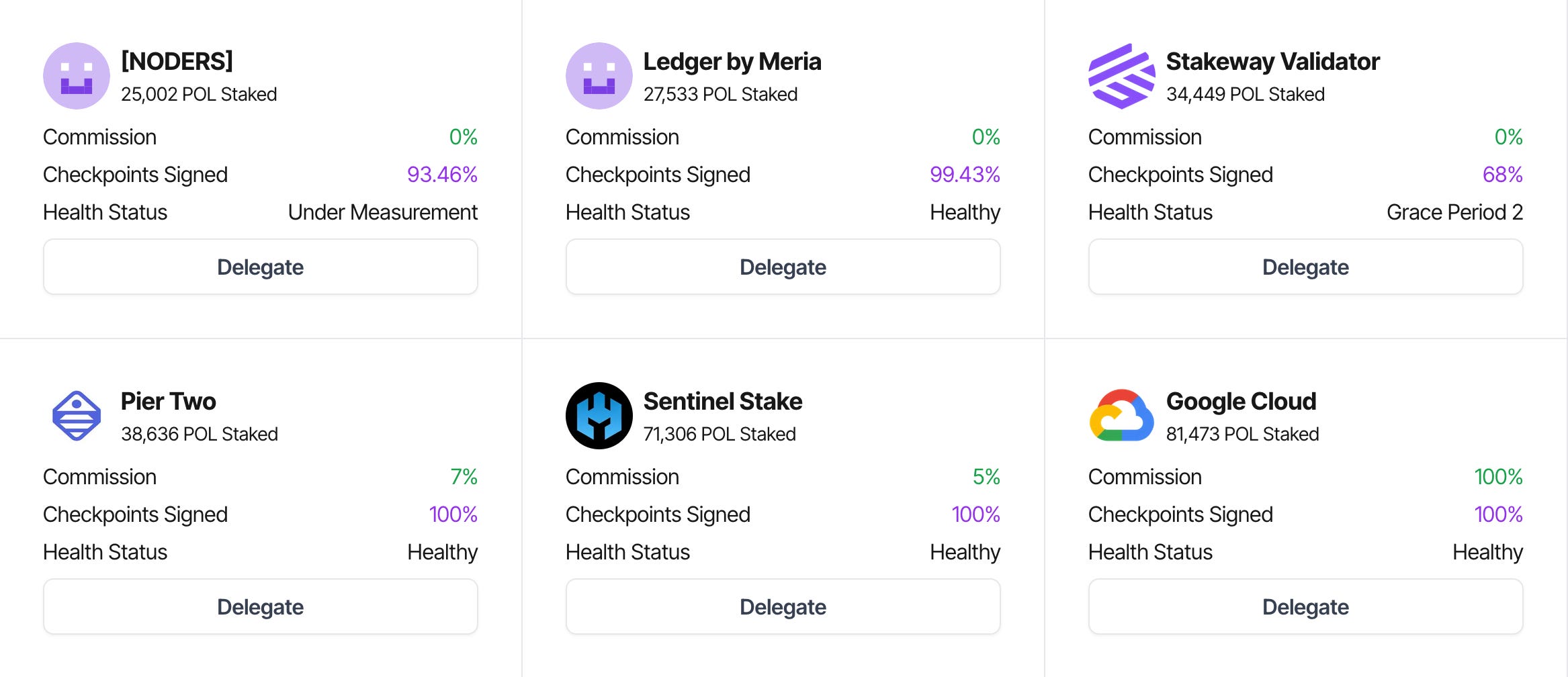
Health Status refers to the health of the validator. Anything else other than “Healthy” is really not acceptable.
Checkpoints Signed is the number of checkpoints the validator has signed. While 100% is good, anything above 95% can be within the realm of consideration.
Commission is how much you are willing to pay them to help you earn the reward. 0% seems too good to be true, so I wouldn’t touch those. Google’s 100% doesn’t make sense, i.e. I don’t get any rewards if I stake with them. As for the rest, you’ll need to see more to get a better idea of the commission range. I think the norm is 5-7%, from what I can tell.
There are also a number of validators offering 0% commission. If that’s the case, the question you need to ask yourself is: how are they making money?
You can also sort this list according to Stake, Commissions, and Performance.
Choosing A Validator
Selecting one of them will give you more in-depth info about the validator. Let’s take a look at one of them in detail:
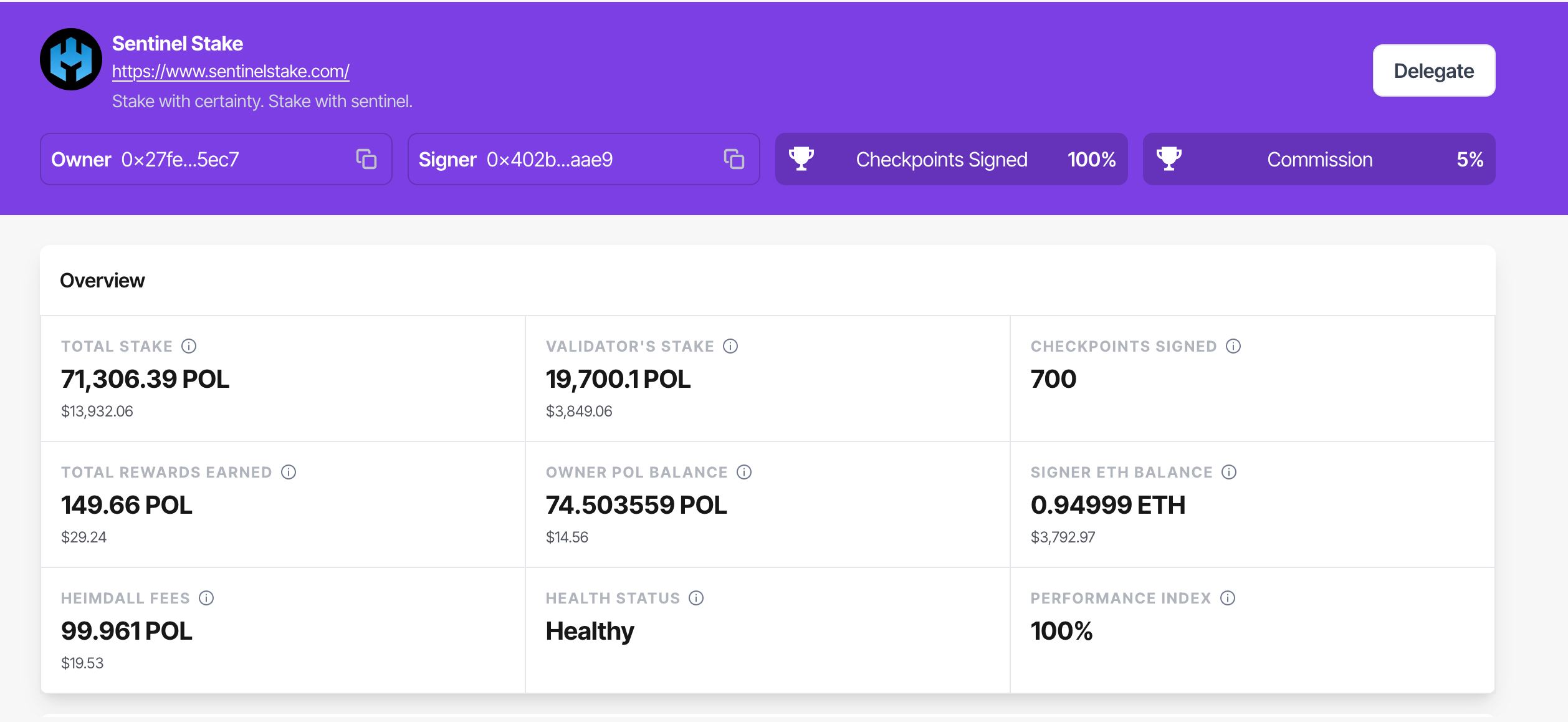
These are the stats associated with the selected validator, Sentinel Stake.
We see that they themselves have 74.503 POL (about $15.00) in their own Ethereum wallet. That’s not too much skin in the game for them, something to take note of for now.
They also only have about $13k worth of POL staked, making them likely a small potato in this field.
Let’s also take a look at their website and see what it says.
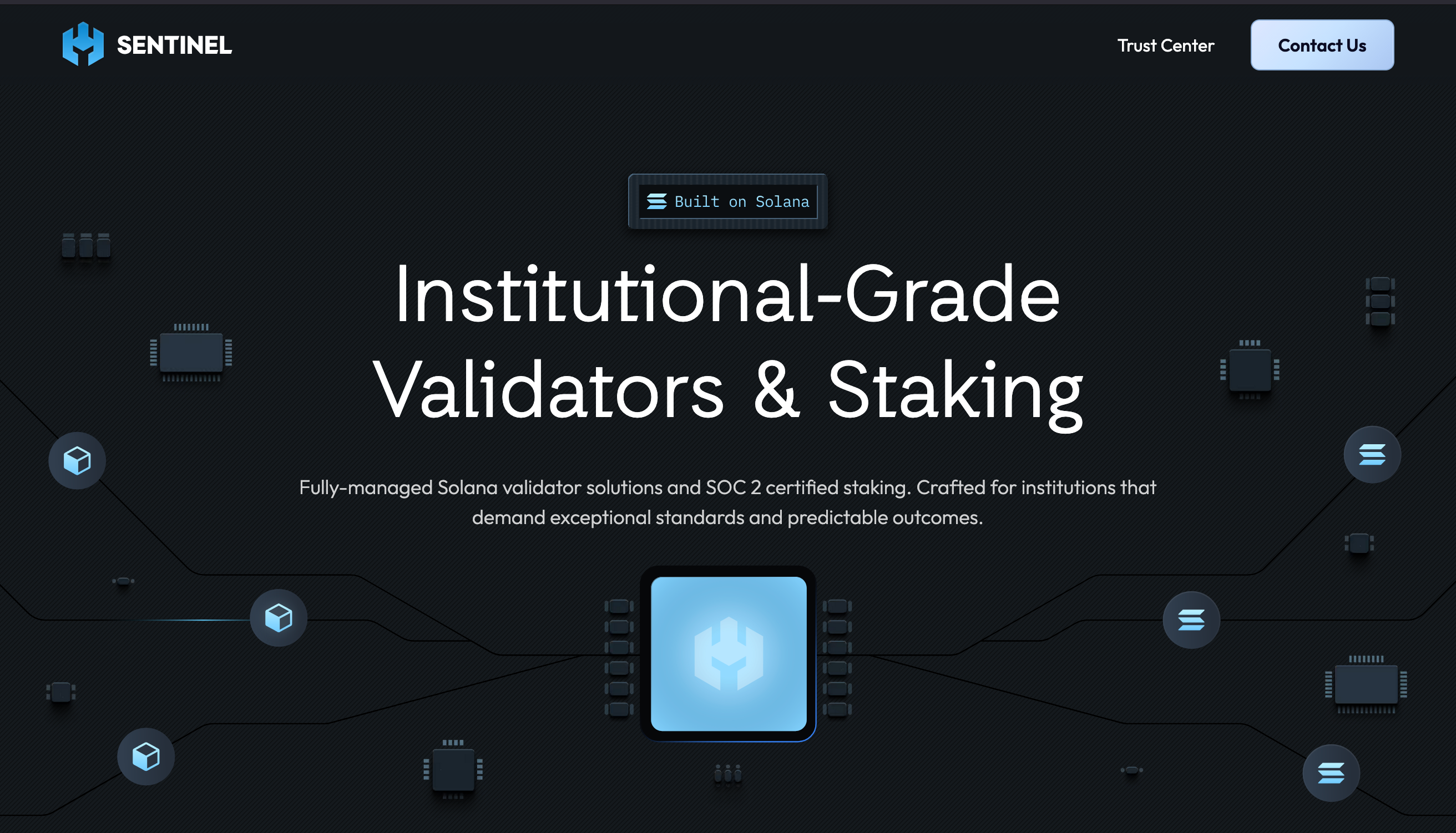
Sentinel Stake looks to be a staking business of sorts. They also look to be a Solana shop, even though they also support the Polygon chain. Their FAQ says as much:
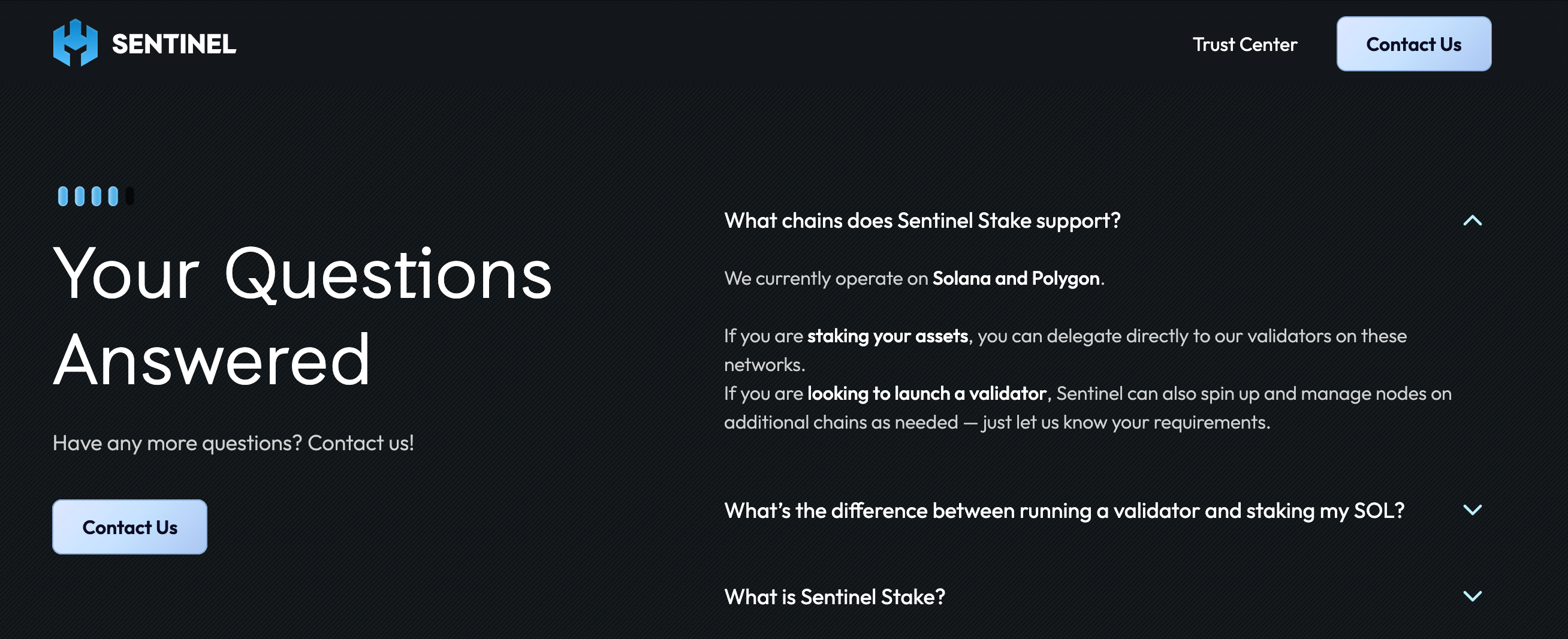
In other words, they might be a good validator for Solana staking but I’m not sure if they are as good for Polygon. Still, we can use this validator as a reference for the other validators we are looking into.
Here’s another one for comparison:
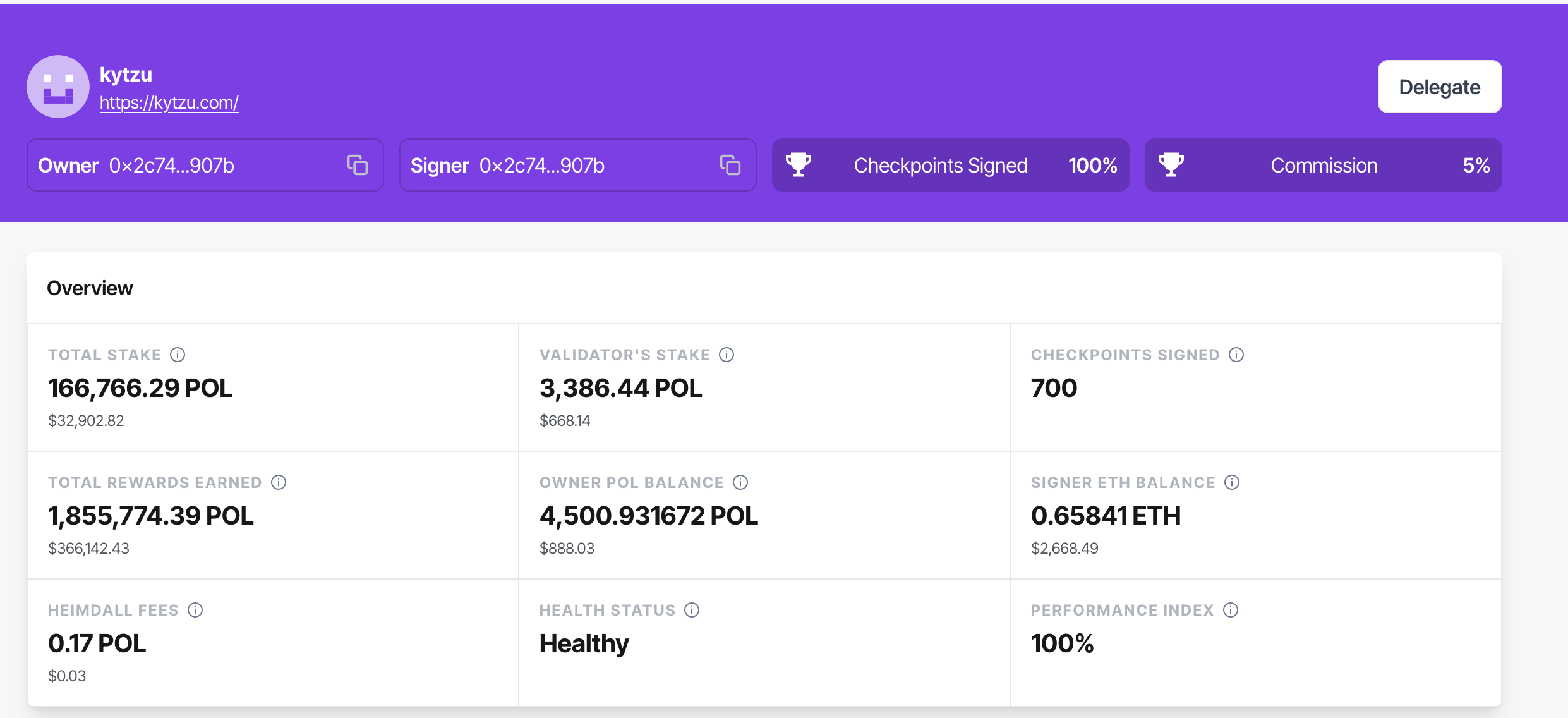
With 4,500 POL, this validator has more skin in the game than the other one. They have also earned more rewards with more staked.
However, their webpage cannot be accessed, which is not a good sign.

Let’s take a look at one more validator for comparison.
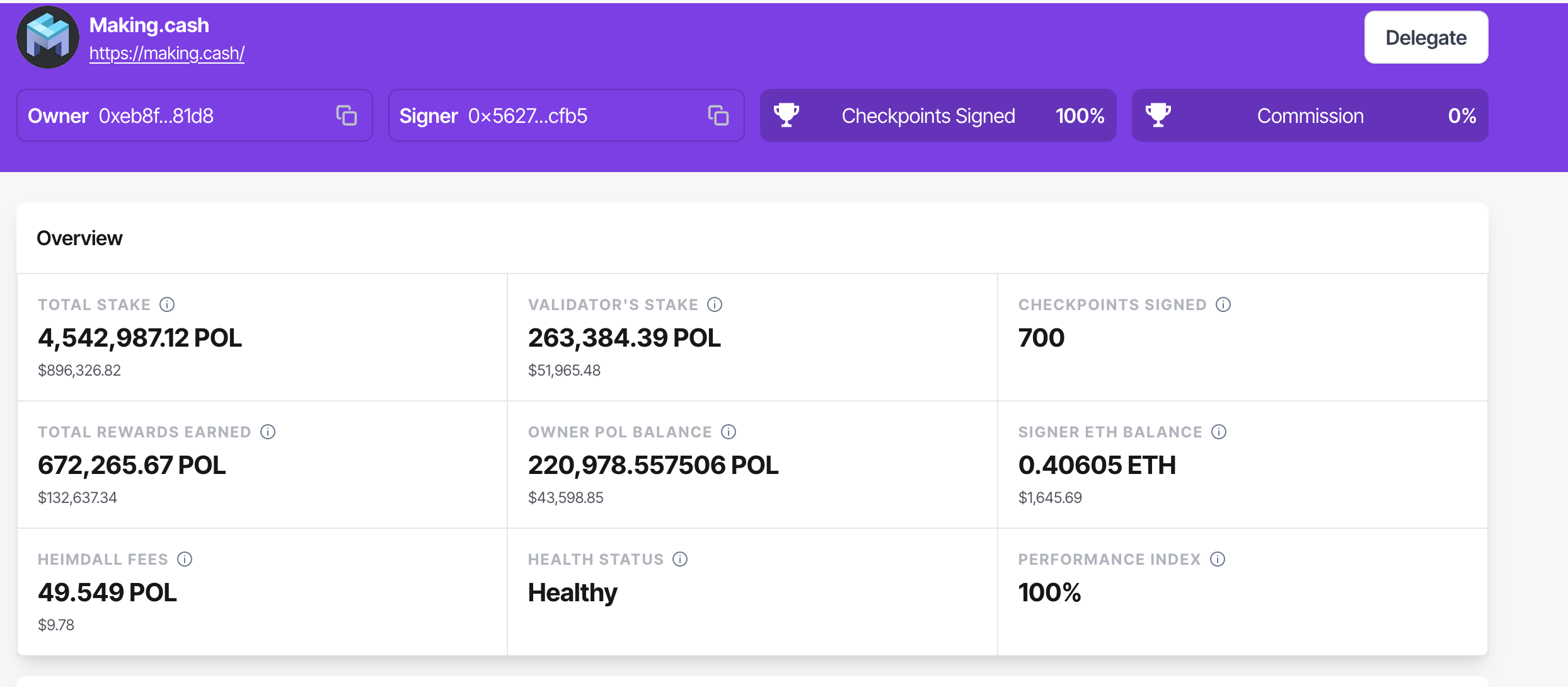
Here’s an interesting one for us to take a look at: Making Cash.
The website shows that they are in the staking business
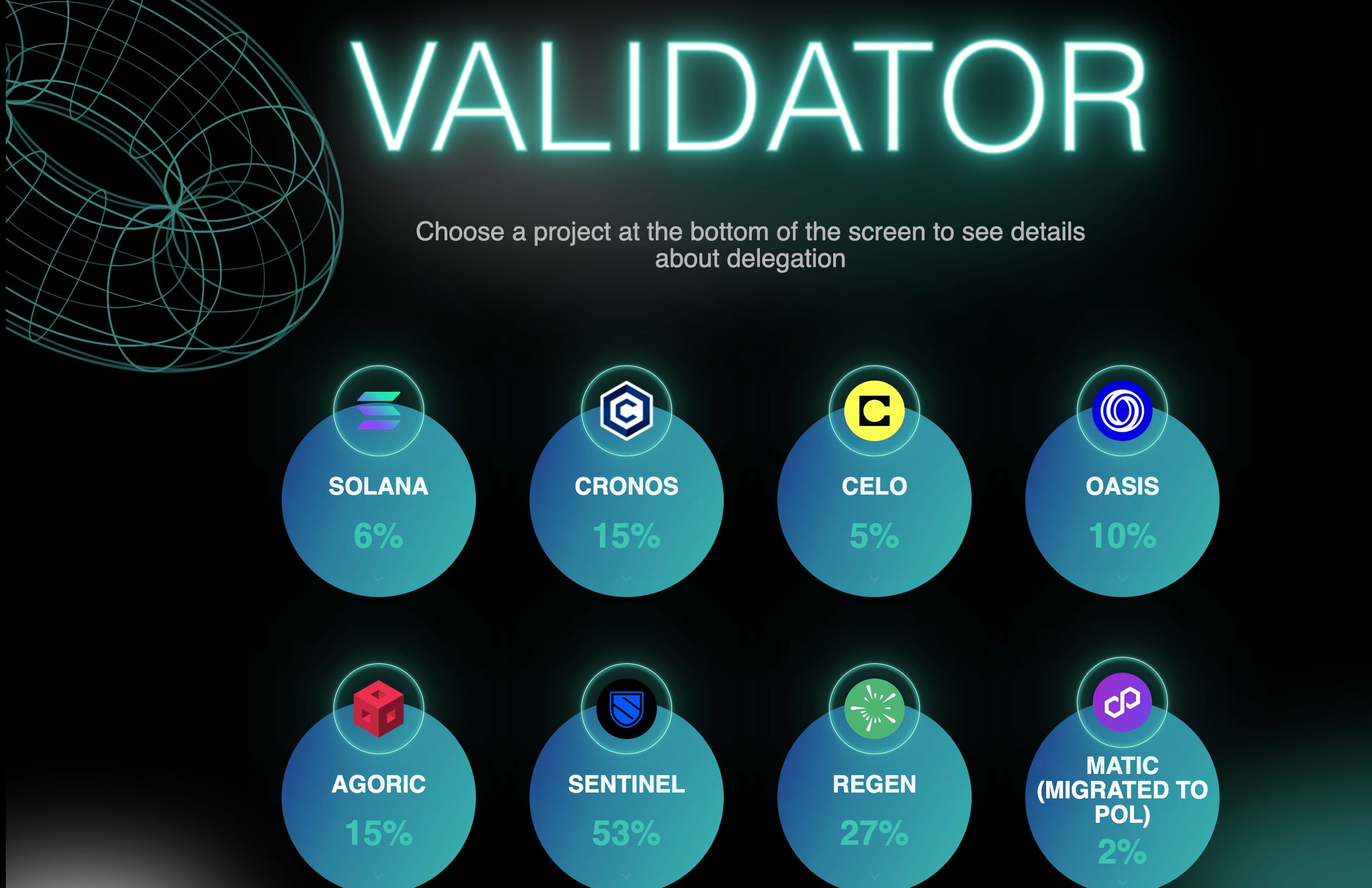
Scrolling down further, I see that their Twitter/X account has not been updated since Dec 2024, when they last reposted something. Their Medium account also shows that their last blogpost made was in July 2022.
However, they also migrated 103,443.4914 MATIC to POL 42 hours ago to their wallet on the Ethereum blockchain.
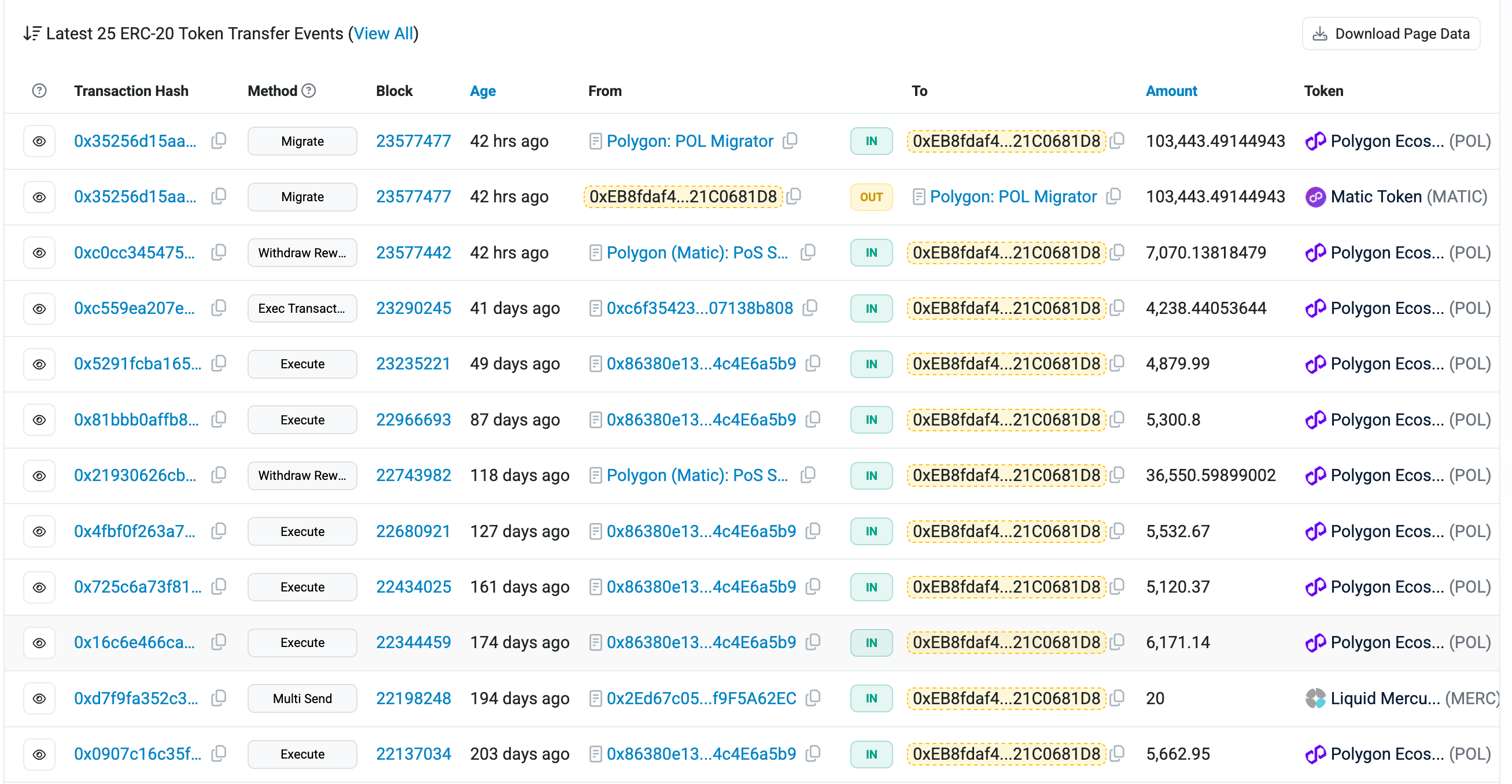
Another interesting thing to note, from looking at the Ethereum blockchain explorer is that one particular address seems to be staking a lot of POL with them. For me, I’d like to see variety because one address sending funds over can be some kind of insider thing (pure speculation!)
All this information is just to show you what you might want to think of when doing research on a validator.
Conclusion
To recap:
100% checkpoints signed is good but not always a solid indicator.
The validator should at least have a decent webpage. This is a business after all.
Owner POL Balance ideally shouldn’t be 0. That means they have no skin in the game.
Explore more about the validator to get a clearer picture of how reliable they can be, such as their socials, wallet address activity on the blockchain etc.
I hope this gives you an idea on how to go about doing your own research about choosing a validator for your POL.
As for me, I will keep doing my research using the methods outlined above in the hopes of finding a good home for my POL. And when I do see something promising, I will only stake a small portion first to see how things go, at least for 3 months, before I put in more.
It’s also a good idea to go with 2 validators. Spreading the risk, y’know?